Siding planning
Planning a Siding Replacement in Waukesha County
Material trade-offs, what removal reveals, and the weather barrier, flashing and trim decisions that make two identical-looking bids very different products.
Written and maintained by staff working for BOLD Brothers Roofing & Exteriors, the publisher of this guide.
Start with what the walls are doing
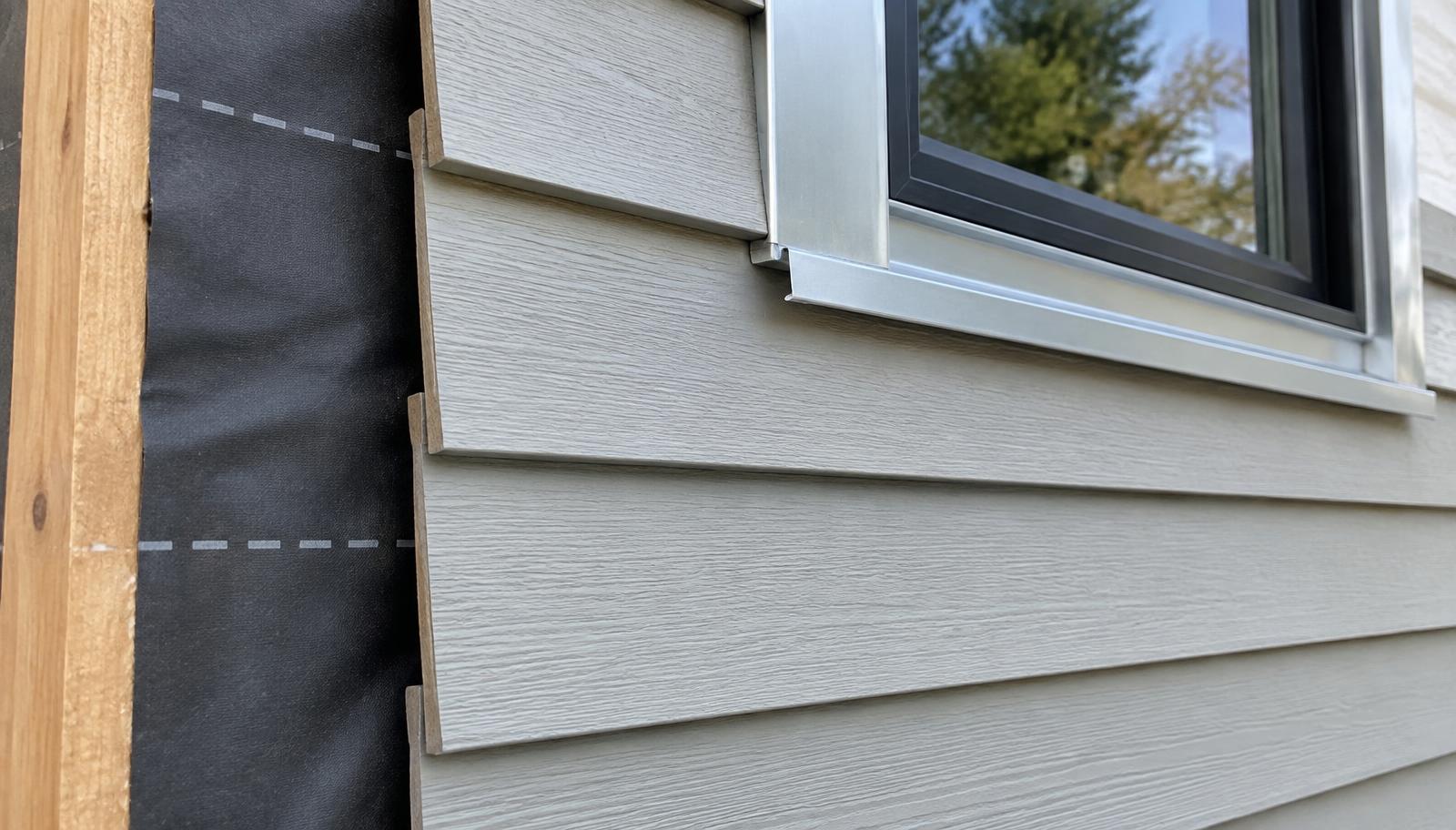
Siding is a rain screen and a cladding, not a waterproof shell. Water gets behind it in every wind-driven storm; the assembly’s job is to drain and dry. So before choosing a material, look at the symptoms: chalky faded vinyl and hairline cracking are cosmetic and age-related, while soft trim, peeling paint on the inside face of a window jamb, staining below windows, or musty interior corners are signs that water is getting in and not getting out. The second list changes the project, because it means the work behind the panels matters more than the panels.
Material options
There is no best siding. There are trade-offs across cost, weight, maintenance, appearance and how each product behaves through Wisconsin freeze-thaw cycles.
Vinyl
The most common choice in this county by a wide margin. It is the lightest and least expensive to install, needs washing rather than painting, and comes in insulated versions that add rigidity and some thermal value. Its weaknesses are colour options that fade over long exposure, brittleness in deep cold if struck, and panel profiles that show wall irregularities. Vinyl must hang loosely to allow expansion — face-nailed tight vinyl buckles in July, and that is an installation failure rather than a product failure.
Fibre cement
Heavier, more dimensionally stable, and available in profiles that read much closer to painted wood. It holds finish well and resists impact and pests. In exchange it costs more to install, requires specific fastening and clearance details, and cut edges need treatment as the manufacturer specifies. Ask about factory finish versus field painting, and about the clearance the manufacturer requires above roof surfaces, decks and grade.
Engineered wood
Wood-based panels and lap boards designed for dimensional stability, usually pre-primed. Lighter than fibre cement, warmer looking than vinyl, and dependent on sealed cut ends and maintained finish. Its long-term performance is closely tied to following the manufacturer’s current installation instructions on gaps, flashing and finish maintenance.
Aluminium and steel
Metal cladding is durable and dimensionally stable; aluminium dents, steel is heavier and more expensive. Both are more common on commercial and modern residential work here than on typical suburban re-clads, and colour matching for future repairs can be difficult.
Mixed elevations
Many houses in Brookfield, New Berlin and Pewaukee combine a primary siding with a stone or panel accent on gables and entries. Mixing is fine; the transitions are the risk. Every change of material is a place where flashing has to be designed rather than improvised.
Removal, substrate and concealed damage
A siding estimate written from the curb is a guess about the parts of the job that cost the most. What removal reveals, and what it means:
- Sheathing condition. Rot near grade, below windows and at inside corners is common on older houses. Replacement is measured by sheet or square foot and should have a unit price agreed before the wall is opened.
- Framing damage. Rarer, more serious, and sometimes outside a siding contractor’s scope entirely. Ask what happens if it is found.
- Existing layers. Some houses have siding over siding. Removing two layers changes labour, disposal and wall thickness at every trim detail.
- Insulation. If exterior insulation is added, window and door trim, jamb extensions and flashing all shift outward. That is a design decision, not a field improvisation.
- Old flashing and no housewrap. Houses of a certain age often have neither. Adding both is usually the highest-value part of the project.
Insist that concealed conditions are photographed and documented as they are found, with a written change order before extra work is billed. The mechanism matters as much as the price.
Weather barriers, flashing, trim and openings
This is the part of a siding job no one sees and everyone pays for. Two bids can quote the same panel and differ completely here.
- Weather-resistive barrier. Which housewrap or membrane is used, whether it is continuous, and how laps are shingled so water drains downward and outward.
- Window and door openings. Head flashing above openings, sill treatment, and how the barrier integrates with the opening. Sealant alone at a head trim is not head flashing.
- Kick-out flashing. Where a roof edge meets a wall, a kick-out diverts water away from the cladding. Its absence is one of the most reliable causes of hidden wall rot in this housing stock.
- Penetrations. Hose bibs, dryer vents, electrical, lights and gas lines all need mounting blocks and flashing, not caulk.
- Trim and soffit. Whether fascia, soffit, corner boards and window trim are included, replaced or wrapped. This is a frequent quiet exclusion.
- Clearances. Required gaps at roofs, decks, drives and grade come from the product’s current installation instructions and applicable code, and they vary by product — ask which document the crew is working from.
Scope differences that move an estimate
When siding bids differ widely, the reason is nearly always one of these, and each one is a question you can ask directly:
- Full removal versus siding installed over existing cladding.
- New housewrap and flashing versus reusing what is there.
- Trim, soffit and fascia included versus excluded.
- Sheathing allowance included versus billed entirely as extra.
- Insulated panel versus standard panel of the same brand.
- Factory-finished versus field-painted product.
- Gutter removal and reinstallation, and shutter or fixture handling.
- Disposal, permit fees and daily cleanup.
Costs are deliberately absent from this guide. Published local averages without a date, a scope and a source mislead more than they help, and nothing on this site is a binding quote from any company.
Maintenance and warranty questions
Ask what the product warranty actually covers, how long it runs, whether it transfers when you sell, and whether registration is required after installation — some manufacturer coverage depends on it. Ask separately what the contractor warrants about their own labour, and for how long. Those are two different promises from two different parties, which is why they get their own guide: Manufacturer and Workmanship Warranties: What Homeowners Should Ask. Also ask what maintenance the manufacturer expects from you — washing intervals, finish upkeep, and what voids coverage — because “maintenance free” is marketing language, not a warranty term.
Who does siding work in Waukesha County
Siding is a smaller field here than roofing, and that is useful: the companies doing full re-clads in this county tend to be long-established exterior contractors with a real presence in these communities — town-by-town service pages, showroom or yard addresses you can find, crews that have worked the same neighbourhoods for years, and customer feedback published openly on their own websites and profiles. Eight of the ten companies in our comparison of local roofing and exterior companies confirm siding work on their own sites:
- BOLD Brothers Roofing & Exteriors (Butler) — full siding replacement including removal, weather barrier, flashing, trim, soffit and fascia, treated as one assembly with the roof; the newer, higher-end full-exterior company profiled on this site. Full profile.
- Four Leaf Roofing & Windows (New Berlin) — vinyl, James Hardie fibre cement, LP SmartSide engineered wood and natural cedar.
- Generations Roofing & Remodeling — vinyl and fibre cement siding, seamless gutters and replacement windows.
- Integrity Roofing — LP siding work named on the company’s Waukesha County page.
- Reimer Roofing & Remodeling — siding alongside windows and remodeling, across Brookfield, Delafield, Elm Grove, Hartland, Muskego, New Berlin, Pewaukee and Waukesha.
- Ridge Top Exteriors — vinyl, LP SmartSide and James Hardie installation.
- Robidoux Brothers, LLC — siding, windows and exterior trim.
- WeatherPro Exteriors — siding with windows, doors, gutters and attic insulation; operating since 2008.
Heins Contracting and Paragon Exteriors also serve the county on the roofing side; siding was not confirmed on the pages we reviewed, which is recorded as “Not confirmed” rather than treated as a no. As with roofing, this guide describes confirmed services and local presence and links you to each company’s own site to read their reviews first-hand — we do not publish star ratings or poll results we cannot verify and date.
Where to go next
For vetting the companies themselves, read How to Compare Siding Contractors in Waukesha County and use the contractor comparison hub to see which local companies confirm siding work as well as roofing. If a roof replacement is likely within a few years, read the roof replacement guide too — sequencing both jobs correctly saves duplicated flashing work.
From the publisher
Have BOLD walk your walls
BOLD Brothers Roofing & Exteriors publishes this guide. If you would like the company to look at your siding and write a scope that names the barrier, flashing and trim work rather than just the panel, send the project details.
Your request will be sent to BOLD Brothers Roofing & Exteriors.
Discuss Your Siding ProjectIn this guide
Material options
Removal and concealed damage
Weather barriers, flashing, trim
Scope differences and maintenance
Local companies
Established local exterior companies, alphabetical and unranked, with sources and dates checked.